Your Snacking Habit Might Be the Reason You're Always Hungry
Let me paint a picture. It's 10:30 a.m. You had a "healthy" breakfast — maybe some Greek yogurt and granola, or avocado toast. Now you're reaching for a handful of almonds because you've been told that letting yourself get too hungry is the enemy. By noon, you're somehow starving again. You eat lunch. By 3 p.m., you're eyeing the protein bars in your desk drawer. By dinner, you're not even sure if you're hungry or just... eating because it's dinner time.
Sound familiar? You're not alone — and you're not broken. But there's a decent chance your snacking habit is actually part of the problem.
The Story We've Been Sold
Over the past couple of decades, the nutrition and wellness industry has done an excellent job convincing Americans that frequent eating is essential for a healthy metabolism, stable energy, and blood sugar control. "Eat every 2–3 hours," the advice goes. "Never skip a snack. Keep your metabolism fired up."
The snack food industry — now worth over $150 billion in the US — has been more than happy to support that narrative. Enter the explosion of protein bars, trail mix packs, "clean" crackers, nut butter pouches, and fruit-and-cheese snack boxes, all marketed with the language of wellness.
The problem? The science behind constant snacking is a lot murkier than the marketing suggests.
What Constant Snacking Does to Your Hunger Hormones
Here's where it gets interesting. Your body has a sophisticated hunger regulation system built around two key hormones: ghrelin (which signals hunger) and leptin (which signals fullness and satisfaction). When this system is working properly, you feel genuinely hungry before meals, eat until satisfied, and then feel comfortable for a few hours before hunger gradually returns.
But frequent snacking — even on "healthy" foods — can interfere with this natural rhythm. Every time you eat something, you trigger an insulin response. Insulin helps shuttle nutrients into your cells, but it also temporarily suppresses fat burning and can, over time, contribute to a kind of hormonal static that makes it harder to read your body's actual hunger signals.
In other words, you might be snacking to prevent hunger, but inadvertently training your body to expect food constantly — and to confuse the absence of food with a problem that needs fixing.
There's also something called the cephalic phase response — basically, just the sight, smell, or anticipation of food starts priming your digestive system and can trigger hunger even when you weren't actually hungry a few minutes ago. Frequent snacking keeps that loop running almost continuously.
Habitual Hunger vs. Real Hunger
One of the most useful questions you can start asking yourself is: Is this actual hunger, or is this just what I do at 3 p.m.?
Habitual hunger is real in the sense that it feels real — your brain has learned to expect food at certain times and in certain contexts, so it generates cues accordingly. But it's different from physiological hunger, which is your body genuinely signaling that it needs fuel.
Some ways to tell the difference:
- Real hunger comes on gradually. It builds over time and is accompanied by physical cues like a growling stomach or low energy.
- Habitual hunger tends to be immediate and specific. You're suddenly craving a particular thing (chips, something sweet) in a particular context (watching TV, sitting at your desk, driving home).
- Real hunger is flexible. You'd eat pretty much anything. Habitual hunger often comes with strong preferences — if a plate of plain chicken and vegetables doesn't sound appealing but a cookie does, that's a useful data point.
The Case for Fewer, More Satisfying Meals
This isn't an argument for skipping meals or ignoring your body. It's the opposite, actually — it's an argument for listening more carefully.
For a lot of people, eating two or three genuinely satisfying, nutrient-dense meals (with adequate protein, fat, and fiber to promote real satiety) leaves them feeling far more stable and comfortable than six smaller eating occasions spread throughout the day. The research on meal frequency and metabolic outcomes is genuinely mixed, but there's solid evidence that eating to true satiety at meals — rather than eating "just enough" and then snacking to fill the gaps — can reduce overall calorie intake and improve hunger regulation over time.
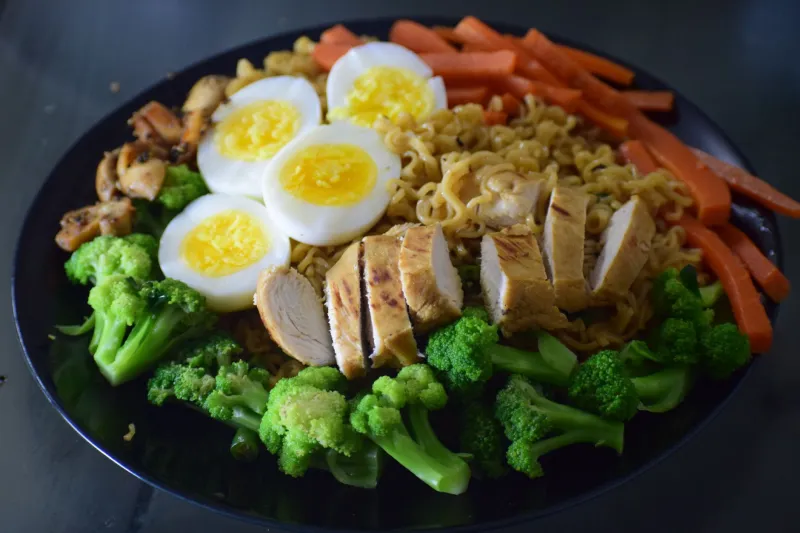
Protein and fat are your best friends here. Both take longer to digest and have a stronger impact on satiety hormones than simple carbohydrates. A lunch built around a solid protein source (chicken, salmon, eggs, legumes), healthy fat, and plenty of fiber-rich vegetables will carry you much further than a low-fat snack plate ever will.
So Should You Never Snack?
Honestly? That's not the point. If you're genuinely hungry between meals, eating something is completely fine — and ignoring real hunger signals isn't the goal either. The goal is awareness.
If you eat breakfast at 7 a.m. and you're legitimately, physically hungry at 10 a.m., that's worth paying attention to — it might be a sign your breakfast wasn't satisfying enough. But if you're reaching for almonds at 10 a.m. because you always do, or because you're bored, or because your coworker offered them and they were just... there, that's worth noticing too.
The wellness industry has made "healthy snacking" feel like a virtue. But real nutritional wellness isn't about eating perfectly branded foods on a precise schedule. It's about building a relationship with your own hunger — learning to recognize it, respect it, and respond to it in a way that actually leaves you feeling satisfied.
Sometimes the most radical thing you can do is just... wait until you're actually hungry.