Sleeping In on Saturday Won't Save You: The Truth About Sleep Debt
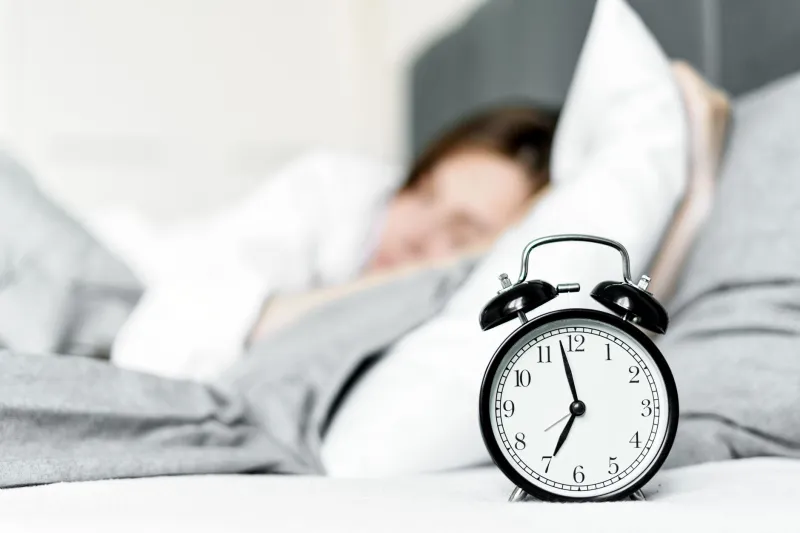
Let's be honest. Most of us are running on fumes by Thursday. The alarm goes off, we hit snooze twice, chug a coffee the size of a small bucket, and promise ourselves that we'll sleep in on Saturday to make it all right. It's practically a national ritual at this point.
But here's the uncomfortable truth your body has been trying to tell you: that extra hour or two on the weekend isn't undoing the damage. Not even close.
Sleep debt is one of those wellness topics that sounds a little abstract until you understand the mechanics — and then it becomes impossible to ignore.
What Exactly Is Sleep Debt?
Sleep debt is the cumulative gap between how much sleep your body actually needs and how much it's been getting. Most adults need somewhere between seven and nine hours per night, according to the American Academy of Sleep Medicine. If you're consistently clocking six hours on weeknights, you're racking up an hour of debt every single night.
Do that Monday through Friday, and you've built up five hours of deficit before the weekend even starts. Over weeks and months, that number compounds. Researchers at the University of Pennsylvania found that people who slept six hours a night for two weeks performed just as poorly on cognitive tests as people who had been kept awake for 48 hours straight — and, critically, most of them didn't even realize how impaired they were.
That last part is worth sitting with. Sleep deprivation doesn't just make you tired. It quietly erodes your ability to accurately judge how tired you are.
Why the Weekend Catch-Up Myth Falls Flat
The idea that you can "bank" sleep or pay back debt with a weekend binge sounds logical, but it doesn't hold up under scrutiny. A study published in Current Biology followed participants who were sleep-restricted on weekdays and allowed to sleep freely on weekends. While those participants did sleep longer on Saturday and Sunday, their metabolic markers — including insulin sensitivity and weight gain patterns — didn't recover. In fact, they tended to eat more during late-night hours over the weekend, further disrupting their body's natural rhythms.
There's also the issue of social jet lag. When you stay up late Friday night and sleep until 10 a.m. Saturday, you're essentially shifting your internal clock — the same way you would if you flew across two time zones. Come Monday morning, your circadian rhythm is confused, your cortisol timing is off, and you're starting the week already behind.
So the cycle repeats. And deepens.
What Sleep Debt Is Actually Doing to Your Body
This isn't just about feeling groggy. Chronic sleep deprivation triggers a cascade of physiological effects that touch nearly every system in your body.
Metabolism and weight: Sleep loss disrupts the hormones ghrelin and leptin, which regulate hunger and fullness. When you're underslept, ghrelin goes up (you feel hungrier) and leptin drops (you feel less satisfied). Your body also becomes less efficient at processing glucose, which over time raises the risk of type 2 diabetes.
Mental health: The relationship between sleep and mood is bidirectional, but the evidence is clear that poor sleep amplifies anxiety, irritability, and depressive symptoms. Matthew Walker, a neuroscientist and sleep researcher at UC Berkeley, has described sleep as the single most effective thing we can do to reset our brain and body health each day — and the data backs him up.
Immune function: Your immune system does a lot of its maintenance work while you sleep. Studies have shown that people who sleep fewer than six hours a night are significantly more likely to catch a cold when exposed to a virus than those who sleep seven or more hours. Skimping on sleep ahead of flu season isn't just bad timing — it's basically rolling out the welcome mat.
Heart health: The American Heart Association has flagged poor sleep as a risk factor for hypertension and cardiovascular disease. Consistently short sleep raises blood pressure and increases inflammation markers, both of which put stress on your heart over time.
So How Do You Actually Repay Sleep Debt?
The good news is that sleep debt isn't permanent. The less good news is that you can't pay it back in a weekend. Research suggests that recovering from significant sleep deprivation can take several weeks of consistent, adequate sleep — not a Saturday sleep-in.
Here are strategies that actually move the needle:
Prioritize consistency over quantity. Going to bed and waking up at the same time every day — yes, including weekends — is one of the most powerful things you can do for your sleep quality. Your circadian rhythm thrives on regularity. Even if you're still working on getting a full eight hours, a consistent schedule helps your body sleep more efficiently.
Add time gradually, not all at once. If you're used to six hours, jumping straight to nine can actually feel disorienting. Aim to add 15 to 30 minutes per night over a couple of weeks. Small, steady increments are easier to sustain and less disruptive to your schedule.
Treat your sleep environment like it matters — because it does. A cool room (around 65 to 68 degrees Fahrenheit is the sweet spot for most people), blackout curtains, and no screens for at least 30 minutes before bed aren't just nice-to-haves. They're the foundation of quality sleep. You can be in bed for nine hours and still wake up unrefreshed if your environment is working against you.
Watch the caffeine clock. Caffeine has a half-life of about five to seven hours, which means that afternoon latte at 3 p.m. still has half its stimulant effect in your system at 8 or 9 p.m. If you're struggling to fall asleep, pulling your caffeine cutoff earlier — ideally before noon — can make a surprising difference.
Short naps can help, but strategically. A 20-minute nap before 3 p.m. can take the edge off acute fatigue without interfering with nighttime sleep. It won't erase your debt, but it can help you function better in the short term while you work on building better overnight habits.
The Bigger Picture
We live in a culture that quietly celebrates busyness and treats sleep like a luxury or a sign of laziness. "I'll sleep when I'm dead" is said like a badge of honor, not a warning sign. But the science is increasingly unambiguous: sleep is not optional maintenance. It's the foundation everything else sits on — your mood, your metabolism, your memory, your immune system, your heart.
That weekend sleep-in feels restorative because it takes the edge off exhaustion. But it's a little like making the minimum payment on a credit card. You feel slightly better for a moment, but the balance keeps growing.
The real daily dose here isn't a supplement or a superfood. It's seven to nine hours of consistent, quality sleep — night after night. It's not glamorous advice, but it might be the most important thing you do for your health this year.