Every Ping Is Costing You More Than You Realize
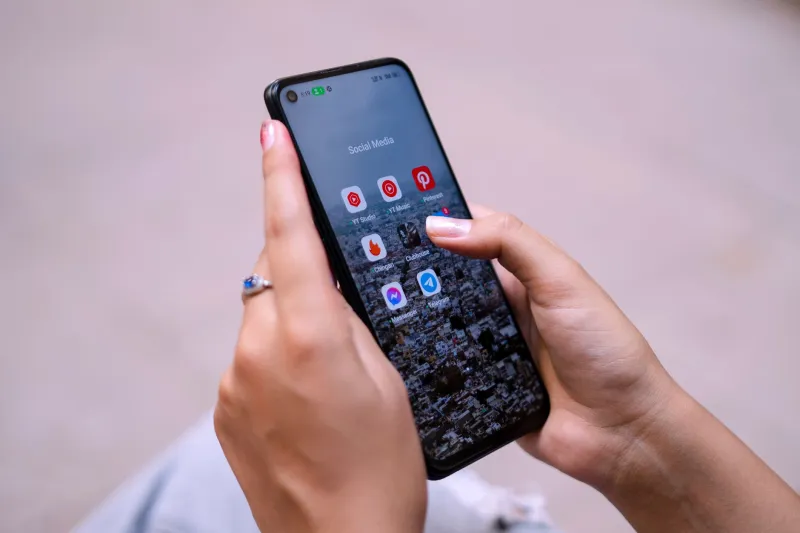
It starts innocently enough. A buzz from your pocket. A little red badge on your email app. A banner sliding across the top of your screen while you're mid-sentence on a work document. You glance, you register, you go back to what you were doing. No big deal, right?
Except it is kind of a big deal. A surprisingly big one.
Research out of UC Irvine found that after a single interruption, it takes an average of 23 minutes to fully return to a task. Twenty-three minutes. If you're getting interrupted every few minutes by notifications — and most Americans are — you're essentially never reaching the kind of focused, productive mental state where your best thinking actually happens.
That's not just a productivity problem. It's a brain health problem.
What Notifications Are Actually Doing to Your Brain
Here's the part that might make you want to silence your phone for good. Every time you receive a notification — even one you don't act on — your brain registers it as a stimulus that needs to be evaluated. Your prefrontal cortex, the part of your brain responsible for complex thinking, decision-making, and focus, gets pulled into a micro-assessment: Is this important? Should I respond? Can it wait?
That process burns cognitive fuel. And you've only got so much of it each day.
Neuroscientists call this phenomenon "attention residue." Even after you decide to ignore a notification and return to your original task, a fragment of your attention stays snagged on that unread message. You're technically back to work, but mentally, you're operating at a fraction of your capacity.
Over the course of a day filled with pings, banners, and badges, that residue accumulates. By 3 p.m., your brain isn't just tired — it's fragmented. Decision fatigue sets in. Simple choices feel harder than they should. Creativity tanks. And your stress levels? They quietly creep upward, even if you can't pinpoint why you feel so fried.
The Stress Connection Nobody Talks About
There's a physiological layer to this worth understanding. Notifications trigger small but real spikes in cortisol — your body's primary stress hormone. Individually, those spikes are minor. But when they're happening dozens of times a day, every day, your nervous system starts running in a low-grade state of alertness that it was never designed to sustain long-term.
Chronically elevated cortisol is linked to everything from disrupted sleep and weight gain to weakened immune function and increased anxiety. You might not connect your afternoon headache or your restless nights to your notification settings, but the relationship is more direct than most people think.
A 2016 study published in the journal Computers in Human Behavior found that participants who checked their phones less frequently throughout the day reported significantly lower stress levels — without any other lifestyle changes. The phone wasn't the only variable, but it was a meaningful one.
Deep Work Is Becoming a Rare Skill
Author and computer science professor Cal Newport coined the term "deep work" to describe cognitively demanding tasks performed in a state of distraction-free concentration. The kind of thinking that produces real results — writing, strategizing, problem-solving, learning — requires sustained, uninterrupted focus.
The troubling reality is that for many people, deep work has become almost impossible to access. Not because they lack intelligence or discipline, but because their environment is engineered against it. Apps are designed to interrupt. Algorithms reward engagement. Every platform competes for your attention, and your brain, wired to respond to social signals and novel information, plays right into it.
Over time, the neural pathways associated with sustained focus can actually weaken from disuse — while the pathways associated with task-switching and distraction-seeking get reinforced. In plain terms: the more you let notifications fragment your attention, the harder it becomes to focus even when you want to.
Taking Back Your Brain Without Going Full Hermit
Good news: you don't have to ditch your smartphone or move off the grid to start reversing this. Small, intentional changes to how you manage notifications can create a meaningful shift in your mental clarity and stress levels.
Start with a notification audit. Go into your phone's settings right now and count how many apps have permission to send you notifications. For most people, the number is startling. Ask yourself honestly: which of these actually require real-time alerts? Probably fewer than five. Turn off everything else.
Create focus blocks. Designate specific windows during your day — even just 60 to 90 minutes — where your phone is on Do Not Disturb and you're working on one thing. No tab-switching, no quick email checks. These blocks train your brain to sustain attention again, like a muscle being rehabilitated.
Batch your checking. Instead of responding to messages the moment they arrive, set two or three designated times each day to check and respond. Most things that feel urgent genuinely aren't, and giving yourself permission to respond on your own schedule reduces the cortisol spikes that come from constant reactivity.
Move your phone physically. Out of sight genuinely means out of mind when it comes to cognitive load. Keeping your phone in another room during meals, focused work, and the first hour of your morning can dramatically reduce the background hum of distraction — even if it's on silent.
Reclaim your mornings. The first 30 to 60 minutes after you wake up are when your brain is most receptive and your cortisol rhythm is naturally rising. Flooding that window with notifications and social media essentially hijacks your mental baseline for the rest of the day. Try protecting it.
The Bigger Picture
We talk a lot about what we're putting into our bodies — what we're eating, drinking, supplementing. But we don't talk nearly enough about what we're feeding our brains and nervous systems on a moment-to-moment basis. The information diet matters just as much as the food one.
Reclaiming your focus isn't about becoming less connected. It's about being more intentional with when, how, and why you choose to engage. Your attention is genuinely one of your most valuable health resources. Treat it like one.